Water hardness and cleaning
Water is both a formulation input and a use condition and can significantly affect outcomes.
Read article
Water-based products need appropriate microbiological, physical and chemical stability assessment.
← Back to insights
Water-based products need appropriate microbiological, physical and chemical stability assessment.
Physical stability concerns separation, sediment and texture; chemical stability concerns ingredient and property changes; microbiological stability addresses unwanted organisms according to risk. An aqueous product may look intact while having an invisible problem. Fragrance and thickness are not preservation systems, and protection must suit the product category and use pattern.
Monitor samples in the final pack under justified time and temperature conditions for appearance, odor, pH, viscosity and microbial indicators as appropriate. ISO 11930 describes a preservation efficacy approach for cosmetics when relevant. Accelerated tests can reveal early problems, but do not by themselves prove a particular expiration period without suitable evidence and interpretation.
To evaluate hand-wash stability, fill samples in the intended production pack and follow a justified time-and-temperature program. Record appearance, scent, pH and viscosity at planned intervals. Assess microbial risk and preservation testing as appropriate to the category. Do not convert a week of elevated-temperature storage into a multi-year shelf-life promise; evidence and scientific interpretation are required. Visual appearance cannot reveal every stability failure.
Choose tests relevant to the product and regulations.
Watch color, odor, separation and sediment.
Do not assign shelf life without suitable evidence.
References for general scientific principles; they do not imply MS CHEM has performed tests or holds certifications.
 MS CHEM / 20
Water is both a formulation input and a use condition and can significantly affect outcomes.
Read article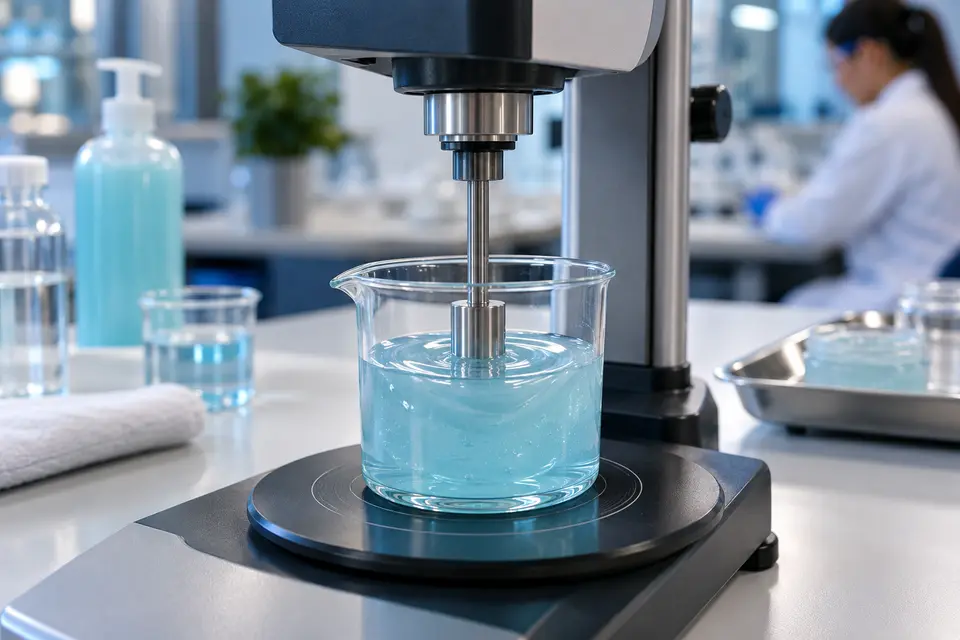 MS CHEM / 21
Thicker is not always better; flow, stability and dispensing matter.
Read article MS CHEM / 22
pH matters to performance, stability and compatibility, but does not define quality alone.
Read article