Batch records and traceability
Good records explain batch variation and make troubleshooting easier.
Read article
Structured cleaning between batches reduces contamination and cross-product carryover.
← Back to insights
Structured cleaning between batches reduces contamination and cross-product carryover.
Raw materials or products may remain in hoses, valves, pumps and inaccessible fittings. Carryover can alter the next batch’s fragrance, color or compatibility. A hygiene program maps product-contact surfaces and contamination risks rather than cleaning only the visible tank.
Written procedures define methods, tools and precautions; verification provides risk-appropriate evidence such as visual checks, residue measurement or relevant microbial tests. Record equipment status before the next run and segregate tools when materials are incompatible. Review practices after incidents or equipment changes to maintain effectiveness.
After producing a strongly fragranced cleaner, residual odor may carry into the next product. Inspect hoses, fittings and nozzles that can retain material, then review cleaning records and equipment-release status. Choose verification suited to the residue and risk; redesigning a hard-to-clean connection may be better than endlessly repeating washing. Review shared tools and segregate them when incompatible materials warrant it, rather than cleaning the vessel alone.
Identify difficult-to-reach retention points.
Document and verify cleaning procedures.
Segregate tools for incompatible materials where needed.
References for general scientific principles; they do not imply MS CHEM has performed tests or holds certifications.
 MS CHEM / 28
Good records explain batch variation and make troubleshooting easier.
Read article MS CHEM / 29
Equipment choice depends on viscosity, batch scale, hygiene and maintenance.
Read article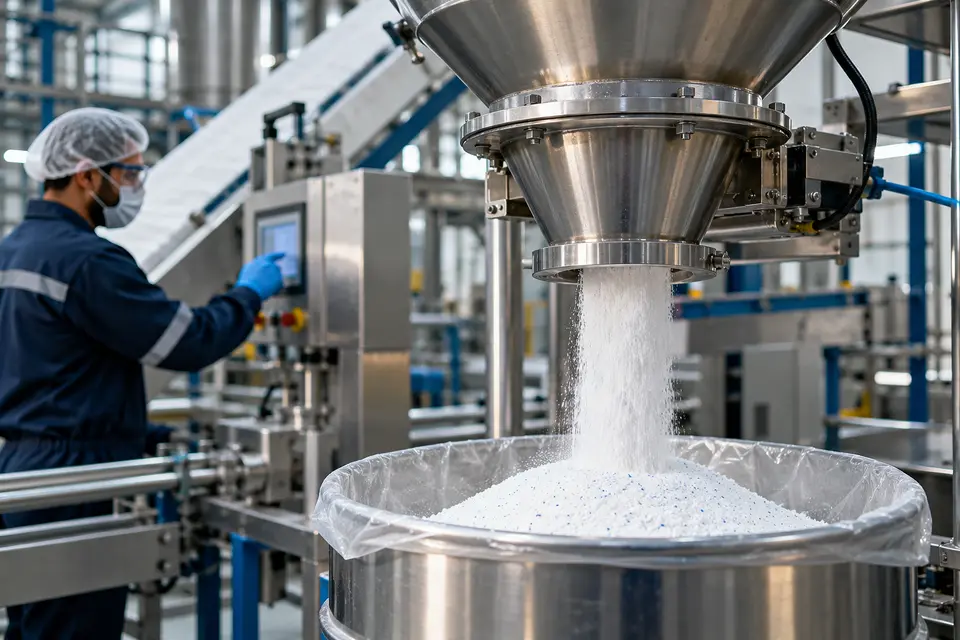 MS CHEM / 34
Humidity, particle size and dust affect processing and workplace safety.
Read article