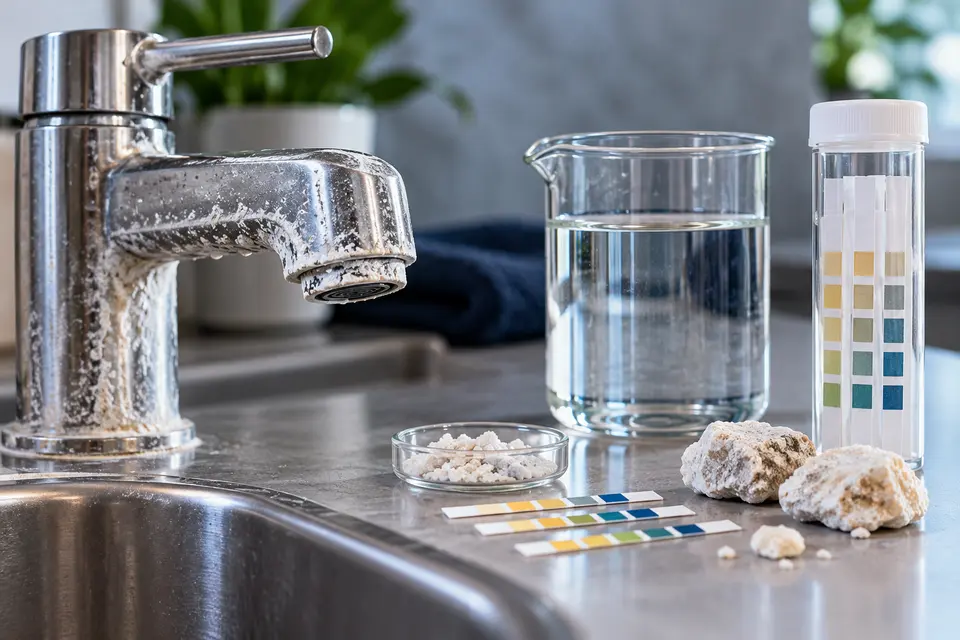
Water hardness and cleaning
Water is both a formulation input and a use condition and can significantly affect outcomes.
Read article
Fragrance depends on solvents, surfactants, packaging and storage conditions.
← Back to insights
Fragrance depends on solvents, surfactants, packaging and storage conditions.
Commercial perfumes contain compounds with different solubility, volatility and stability. Addition to a cleaning base may cause haze, color shifts or viscosity changes depending on surfactants, solvents and packaging. Bottle scent may differ from fragrance during application and after a surface dries, so each stage needs assessment.
Compare perfumes or levels in controlled samples and follow odor, clarity, color and rheology in storage. Review applicable IFRA category standards, supplier documentation and target-market disclosure rules. A fragrance that users like is not proof of zero sensitivity risk. Investigate compatibility before increasing perfume levels to address weak scent.
For a new perfume in a clear floor cleaner, prepare an unperfumed control and candidates with differing perfume levels. Monitor haze, color and viscosity during storage, then assess scent at dilution and after the floor dries. If cloudiness develops, examine perfume solubility and base interactions instead of randomly adding solvent. Review supplier use guidance and applicable fragrance-category standards.
Test scent stability in the finished formula.
Watch haze or color shifts after addition.
Review fragrance component disclosure requirements.
References for general scientific principles; they do not imply MS CHEM has performed tests or holds certifications.
 MS CHEM / 20
Water is both a formulation input and a use condition and can significantly affect outcomes.
Read article MS CHEM / 21
Thicker is not always better; flow, stability and dispensing matter.
Read article MS CHEM / 22
pH matters to performance, stability and compatibility, but does not define quality alone.
Read article